Key Takeaways
- Soy milk powder protein content comes in four working grades — 18%, 20%, 30% and 40% — and the grade changes how the drink behaves, not just what the label says.
- Delivering 25 g of soy protein takes 139 g of 18% powder but only 62.5 g of 40% powder. That single line decides your cost per serving and your mouthfeel.
- 18% grades stay light and thin, so they disappear into fruit drinks and milk tea; 40% grades build body and need more shear and heat to stay in suspension.
- 30% is where soy aroma becomes a feature rather than a background note — it is the grade that carries coffee and cocoa instead of hiding under them.
- Powder ships dry, reconstitutes hot or cold and lets you set protein per serving at the blending stage, which is why R&D cycles on soy milk powder run shorter than on ready-to-drink bases.
- Specify the grade from the target protein per serving first, then work backwards to dosage, flavour load and heat treatment. Doing it the other way round is the usual cause of a reformulation.
- Always confirm whether a supplier quotes crude protein on a dry basis (N x 6.25) or as-packed — the gap between the two is large enough to fail a label check.
Why Protein Content Is the First Spec to Fix
Why this matters to beverage R&D and sourcing teams: protein content is not a nutrition line you fill in at the end. It sets viscosity, flavour masking, heat stability and cost per litre long before anyone tastes the first pilot batch.
Soy milk powder has moved out of the supplement aisle. It now sits in the ingredient store as a base material for flavoured plant-based drinks, and the reason is simple: one raw material, four protein grades, and the freedom to dial a drink’s nutrition by changing the dose rather than reformulating from scratch.
The grades usually offered run from 18% to 40%. At the bottom end, instant soy milk powder is close to the composition of the drink it came from — mild, low in soy character, easy to get into solution. At the top end you are working with something closer to a protein ingredient than a milk powder, and it behaves that way in the tank.
Most specification sheets get this wrong by listing protein content as a minimum. A minimum tells you nothing useful. What a formulator needs is a tight band — 18.0–19.0%, not “min 18%” — because a lot drifting between 18% and 22% will move the viscosity of a finished drink enough to be noticed on the shelf.
Soy Milk Powder Protein Grades at a Glance
| Grade | Protein content | Powder needed for 25 g protein | Body and mouthfeel | Best application |
| Light | 18% | 139 g | Thin, clean, almost no soy note | Fruit drinks, milk tea, light RTD |
| Balanced | 20% | 125 g | Light-middle body, mild | Daily nutrition drinks, school and family formats |
| Aromatic | 30% | 83 g | Noticeable body, clear soy aroma | Coffee, cocoa, cereal and oat systems |
| High protein | 40% | 62.5 g | Dense, needs shear and heat | Sports recovery, meal replacement |
| Custom blend | Set by ratio | Calculated from the blend | Tuned between two grades | Cost and texture optimisation |
The Four Grades, Section by Section
Each grade earns its place for a different reason. Here is what actually changes across the range.
18% — Light Body for Fruit and Tea Systems
At 18% protein content, soy milk powder is at its mildest. There is very little of the beany, cereal character that gets in the way of delicate flavours, and the solids load is low enough that the drink stays thin. That is exactly what a fruit-forward or tea-based product needs: something that adds a smooth, rounded texture without announcing itself.
The trade-off is volume. Hitting a meaningful protein number per serving means a large dose of powder, and at some point the drink starts tasting diluted rather than light. This grade is at its best when the protein claim is modest and the flavour is the reason people buy.
20% — The Balanced Daily-Nutrition Grade
The 20% grade is the general-purpose option. It carries enough protein to support an everyday nutrition positioning while staying mild enough to be flavoured in almost any direction. If you are building a product that has to be acceptable to a broad household audience rather than a niche one, this is where you start and only move off it for a reason.
30% — Where Soy Aroma Starts to Carry the Drink
At 30%, the soy character stops being a problem to mask and becomes part of the profile. Roasted, nutty, slightly cereal — it sits naturally next to coffee and cocoa, which are themselves roasted and slightly bitter. Formulators who try to hide 30% powder behind a delicate flavour usually fight it; formulators who pair it with coffee, cocoa or toasted grain get a drink that tastes composed rather than assembled.
40% — Sports and Meal-Replacement Base
The 40% grade is a protein ingredient that happens to come from soy milk. It is the base for sports nutrition and meal-replacement drinks, where the protein number on the front of the pack is the main reason for the purchase.
It is also the least forgiving grade. High protein content means more water binding, higher viscosity at the same solids level, and a greater tendency to sediment if the hydration and heat steps are rushed. Get those right and you have a dense, satisfying drink. Get them wrong and you have a chalky one that separates in the bottle.

What Protein Content Does to Solubility, Viscosity and Flavour
Three things change as you move up the range, and all three are process problems before they are recipe problems.
Solubility and reconstitution
Lower-protein powders wet out quickly and forgivingly. Higher-protein powders need the water to get between the particles before they hydrate, which usually means higher shear, a longer hydration window, or warm water for the initial dispersion. Cold water straight onto a 40% powder is how lumps are made.
If you need a reference point for what soy delivers nutritionally per 100 g, the USDA’s FoodData Central composition database is the public source most R&D teams cross-check their own assays against.
Viscosity and mouthfeel
Protein binds water. More protein at the same solids level means a thicker drink, and a thicker drink reads as “richer” up to a point and then as “heavy”. The practical consequence is that you cannot swap a 40% powder into a formula written for 18% one-for-one — the dose changes, the water changes, and usually the stabiliser system has to change with them.
Flavour load and beany notes
The compounds behind the beany, green character of soy concentrate along with the protein. A 40% powder carries roughly twice the soy solids per gram of an 18% powder, so it also carries more of that character. Cocoa, coffee, malt and vanilla handle it. Delicate berry and floral notes generally do not, and no amount of flavour dose fixes a mismatch — the usual fix is to step down a grade rather than add more flavouring.
Hitting a Target Protein Content per Serving
Start from the number you want on the label and work backwards. The full nutritional breakdown sits in our nutritional profile of soybean milk powder, but the arithmetic itself is simple: divide the target grams of protein by the protein content of the grade you are using.
The arithmetic
- 25 g protein with 18% powder: 25 / 0.18 = 139 g of powder per serving.
- 25 g protein with 20% powder: 25 / 0.20 = 125 g of powder per serving.
- 25 g protein with 30% powder: 25 / 0.30 = 83 g of powder per serving.
- 25 g protein with 40% powder: 25 / 0.40 = 62.5 g of powder per serving.
- 10 g protein — a common level for a light everyday drink — needs 56 g of 18% powder or 25 g of 40% powder.
That 25 g target is not arbitrary. It is the daily intake level set out in the FDA-authorised soy protein heart-health claim, 21 CFR 101.82. It is worth checking against your own regulatory market before you build a formula around it, because not every jurisdiction recognises the same threshold or the same wording.
Where formulators overshoot
The most common mistake is chasing the highest grade available on the assumption that more protein is always better. It is not. A 40% powder in a drink that only needs 8 g of protein per serving adds cost, viscosity and soy flavour for no benefit the consumer will notice.
The second is ignoring the basis of the protein figure. Crude protein in soy is calculated from nitrogen using the standard conversion factor of 6.25, and whether that is quoted on a dry basis or as-packed changes the number by several percentage points. Two suppliers can quote the same “40%” and mean different things. Ask which basis is in use before you compare prices.
Flavour Pairing by Grade
Pairing is where the grade choice pays off. Naming and labelling of this kind of product follows Codex rules in most export markets — the Codex Alimentarius texts are the reference your regulatory team will be working from.
Matcha and tea
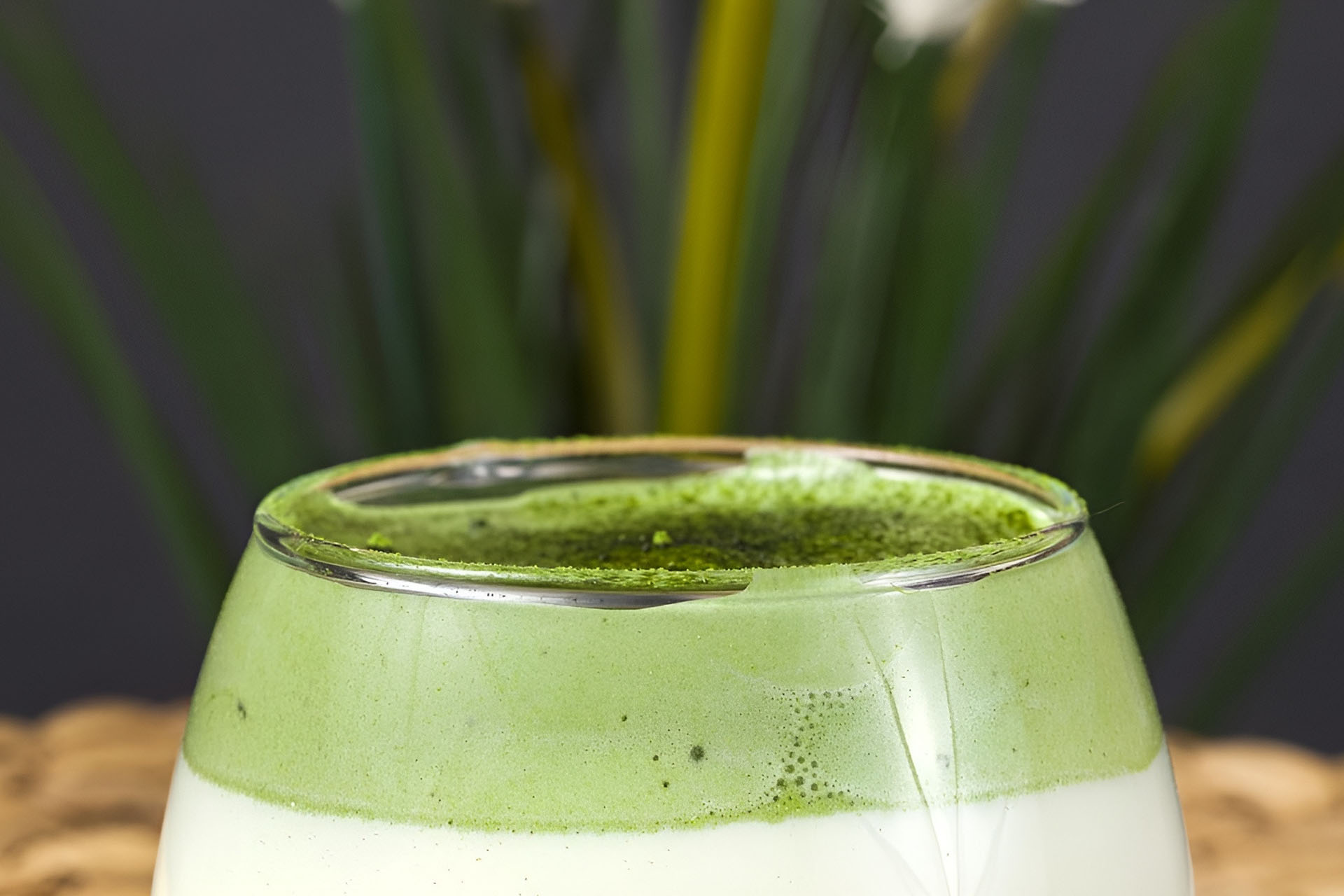
A 20% powder with matcha gives a clean, refreshing soy-milk matcha drink. The grade is mild enough that the tea’s grassy, slightly bitter top note stays in front, while the soy solids give the drink enough body to feel like a beverage rather than flavoured water. A 30% powder under matcha starts to compete with it.
Cereal, oat and meal-replacement systems
30% powder with oats produces a genuinely filling meal-replacement drink. The cereal character of the oat and the toasted character of the higher-protein soy point in the same direction, and the extra protein is what turns a pleasant drink into one that keeps someone full until lunch.
Cocoa, coffee and recovery drinks
40% powder with banana and cocoa is the classic post-exercise recovery combination. Cocoa is strong enough to sit on top of the soy character, banana adds sweetness and body, and the protein load is what the format exists for. Roasted coffee works on the same logic at 30%.
Handling, Storage and Processing Notes
Powder is forgiving compared with liquid base, but it is not inert. The three failure modes on a plant floor are moisture, heat and time in the hopper.
- Moisture is the enemy, not age. A sealed bag of soy milk powder stored cool and dry holds its solubility far longer than an opened one left beside a wet processing line. Caking is the first visible symptom and it starts long before the protein value moves.
- Hot and cold processing are both viable, and that is one reason beverage developers keep coming back to this material. Cold dispersion avoids cooked notes but needs more shear and time; warm dispersion hydrates faster and helps high-protein grades, at the cost of a slightly more cooked profile.
- Dose flexibility is the operational advantage. Because protein content is adjusted by the ratio of powder to other ingredients, one production line can run several products with different protein levels from the same base material.
- Order of addition matters. Salt, acid and sugar change hydration behaviour, and dropping acid into a hydrating high-protein system is a reliable way to get graininess.
Market Outlook and What to Specify from a Supplier
Demand for plant-based drinks that are healthy, convenient and actually taste of something keeps rising. Soy milk powder answers that from two directions at once: it satisfies the preference for plant protein, and it gives younger consumers the new flavours and formats they are looking for.
For a manufacturer, the commercial argument is speed. Development on soy milk powder means short R&D cycles, flexible formulation and fast response to a trend — you can move from concept to a differentiated product on shelf without retooling. For the formulation detail behind that, see our guide to plant-based beverage optimisation. On the demand side, plant protein continues to be treated as a mainstream nutrition choice rather than a niche one; the Harvard T.H. Chan School’s protein overview is a good plain-language summary of where the nutrition consensus sits.
What to put in the specification
- Protein content as a band, not a minimum, and the basis it is quoted on (dry or as-packed, N x 6.25).
- Solubility or dispersibility index, with the test method named — “highly soluble” is not a specification.
- Particle size distribution, which drives both wetting speed and mouthfeel.
- Microbiological limits and, for export, the pesticide and heavy-metal limits your destination market applies.
- Flavour descriptor agreed by sample, not by description. Two 30% powders can taste very different.
- Pack format and moisture barrier — a good powder in a poor bag arrives as a poor powder.
For sourcing teams: the same grade from two suppliers is rarely the same ingredient. Ask for bench samples across at least two grades before you commit to a specification, and run them in your actual process water at your actual shear.
If you are comparing grades for a live project, send the target protein per serving, the flavour direction and your heat and shear limits to the FP Group applications team — that is usually enough to narrow the field to two candidate grades before you order bench samples.
Frequently Asked Questions
Quick answers on soy milk powder protein content, grade selection and what each level means for a finished drink.
Q1. What is the protein content of soy milk powder?
Commercial soy milk powder is supplied in four working grades: 18%, 20%, 30% and 40% protein by weight. Blends between grades are also common and let you set a protein content between those steps. Always check whether the figure is quoted on a dry basis or as-packed, because crude protein is calculated from nitrogen at a factor of 6.25 and the two bases differ by several points.
Q2. Which soy milk powder protein content is best for beverages?
It depends on the drink. Use 18% for fruit and tea drinks where the flavour has to stay in front, 20% for everyday nutrition drinks, 30% for coffee, cocoa and cereal systems where roasted soy character helps, and 40% for sports and meal-replacement formats where the protein number drives the purchase.
Q3. How much soy milk powder do I need for 25 grams of protein?
Divide the target by the grade: 139 g of 18% powder, 125 g of 20%, 83 g of 30%, or 62.5 g of 40%. That difference is why grade choice is a cost decision as well as a nutrition one. The 25 g level comes from the FDA-authorised soy protein claim, 21 CFR 101.82, so confirm it applies in your market.
Q4. Does higher protein content change the taste of soy milk powder?
Yes. The compounds behind the beany, cereal character of soy concentrate along with the protein, so a 40% powder tastes distinctly more “soy” than an 18% one. Strong flavours such as cocoa, coffee, malt and vanilla carry it well. Delicate berry and floral notes tend to lose the fight, and the fix is usually to step down a grade rather than increase the flavour dose.
Q5. Can different soy milk powder protein grades be blended?
Yes, and it is one of the more useful cost levers. Blending 18% and 40% powder lets you land on an intermediate protein content while tuning texture and flavour load independently. Work the blend ratio from the target protein per serving, then check viscosity and sedimentation in a pilot batch before committing.
Q6. How should soy milk powder be stored to protect its protein quality?
Sealed, cool and dry. Moisture is what degrades a powder — it causes caking and destroys solubility long before the protein value itself moves. The protein content on the specification does not drop in a sealed bag held under reasonable conditions, but an opened bag next to a wet processing line will clump and stop dispersing properly.
Q7. What is the difference between soy milk powder and soy protein isolate?
Soy milk powder is dried soy milk and still carries the carbohydrate, fat and fibre of the original bean, which is why its protein content sits between 18% and 40%. Soy protein isolate is refined to roughly 90% protein and has almost none of the flavour or body of the milk powder. Pick the milk powder when you want flavour and mouthfeel; pick the isolate when you want the highest protein at the lowest dose.